If you are pursuing a postgraduate diploma or management program through NMIMS Centre for Distance and Online Education (CDOE), completing the project work is one of the most important academic requirements. The project carries academic credits and provides students with an opportunity to apply theoretical concepts to practical business situations.
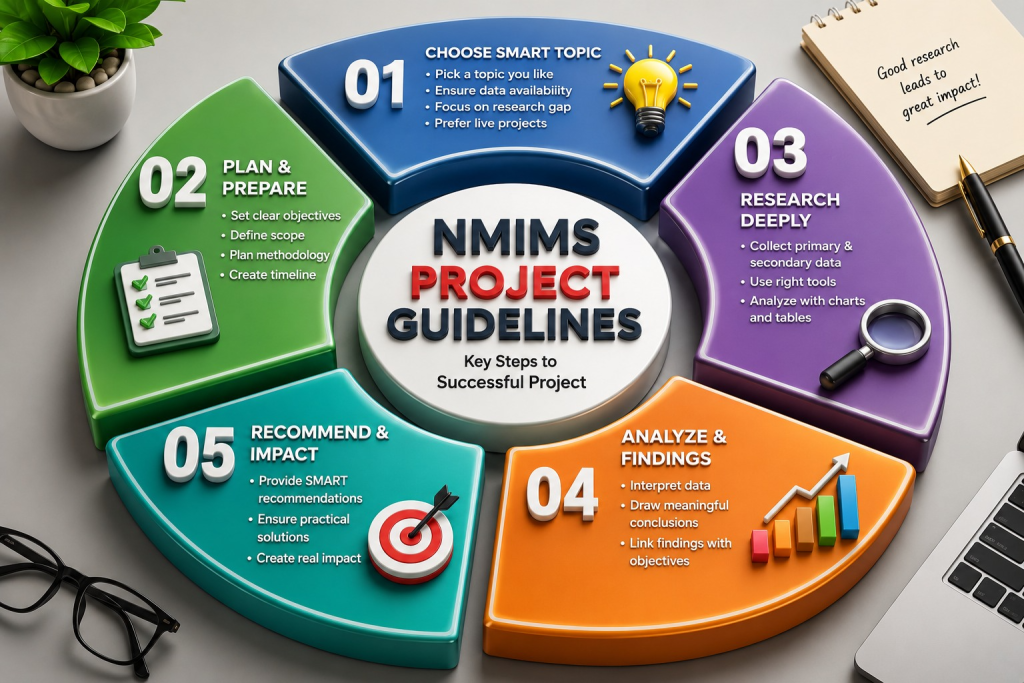
According to the NMIMS project guidelines, students should select a research topic related to their area of specialization. The project should demonstrate analytical skills, research ability, and practical understanding of business problems. Choosing a relevant topic, following the correct research methodology, and preparing the report in the prescribed format are essential for successful project submission.
Choosing the Right Project Topic
Selecting the right project topic is the first step towards preparing a successful project. NMIMS recommends choosing a topic that:
- Matches your specialization.
- Is interesting and relevant to your field.
- Has sufficient primary and secondary data available.
- Addresses a practical business problem.
- Includes a clear research gap or a new perspective.
Students are encouraged to conduct live projects based on real companies, as these provide practical exposure and improve research quality.
Suggested Project Areas
Depending on your specialization, you can choose topics such as:
Marketing
- Customer Relationship Management
- Consumer Buying Behaviour
- Digital Marketing Effectiveness
- Brand Management
- Sales Promotion Strategies
Finance
- Investment Analysis
- Mutual Funds Performance
- Banking Services
- Financial Planning
- Tax Planning
Human Resource Management
- Employee Engagement
- Performance Appraisal
- Training and Development
- Recruitment and Selection
- Employee Satisfaction
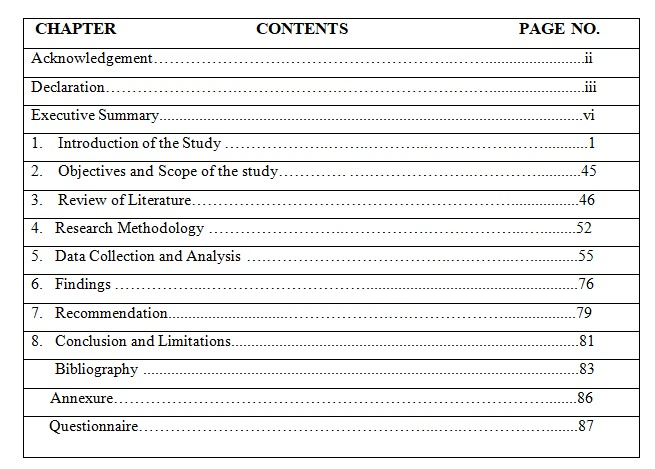
NMIMS Project Report Structure
Introduction
The introduction explains the background of the research topic, its importance, current business scenario, and the purpose of conducting the study.
A well-written introduction helps readers understand why the research is relevant.
Objectives of the Study
The objectives define what the researcher wants to achieve through the project.
They may include:
Primary Objective
Secondary Objectives
Objectives should be realistic, measurable, and directly connected with the research topic.
Scope of the Study
The scope explains the boundaries of the research, including:
Industry covered
Company selected
Geographical area
Time period
Variables included in the study
It clarifies what has been included and excluded from the research.
Literature Review
The literature review summarizes previous studies, books, journals, research papers, and published articles related to the research topic.
A good literature review helps identify:
Existing knowledge
Research gaps
Theoretical concepts
Previous findings
Students should avoid copying content directly and instead write in their own words while providing proper references.pp
Research Methodology
Research methodology is one of the most important chapters of the project.
It generally includes:
Research Design
Research Approach
Data Collection Methods
Primary Data
Secondary Data
Sampling Technique
Sample Size
Research Instruments
Data Analysis Tools
Statistical Techniques
The selected methodology should be suitable for achieving the research objectives.
Hypothesis
Where applicable, students may formulate hypotheses that can be tested using statistical methods.
The hypothesis should be based on the objectives and research problem.
Data Collection and Analysis
Students should collect relevant information from reliable sources.
Primary data may be collected through:
Questionnaires
Interviews
Surveys
Observation
Secondary data may include:
Company reports
Government publications
Journals
Books
Research articles
Reliable websites
Collected data should be analyzed using appropriate charts, graphs, tables, and statistical tools for better interpretation.
Findings
Findings represent the major observations obtained from the research.
They should:
- Be objective-wise.
- Be based on collected data.
- Clearly explain important outcomes of the study.
Suggestions and Recommendations
Recommendations should be practical, realistic, and supported by the research findings.
They should help organizations improve their performance or solve identified business problems.
Conclusion
The conclusion summarizes the overall research and explains whether the objectives of the study have been achieved.
It highlights the overall significance of the project and provides a final understanding of the research outcomes.
Bibliography
Every project should include a bibliography listing all books, journals, articles, reports, and websites referred to during the research.
Proper referencing improves the credibility and academic quality of the project.
Annexure
For More Details Contact Us:
9015595280
9212129290
9313565406